
UK services inflation rose to 3.7% — a sign energy costs are spreading, and a stronger case for rate rises.

Written by
Oliver Summers
The news
UK inflation rose to 3.5% in September, above the 3.4% expected, and the number the Bank of England watches most closely rose with it: services inflation climbed to 3.7% from 3.4%. That is the kind of spread into home-grown prices that the majority of the Bank said in September it had not yet seen. It makes a rise to 4% on 5 November more likely and adds to the case for another after it, which leans the pound higher into the decision. Each measure beat by only a tenth and households are under growing strain, so the case is moderate rather than strong.
What these numbers are
CPI — the change in prices of the everyday goods and services households buy.
Core CPI — the same, excluding energy, food, alcohol and tobacco, to show the underlying trend.
Services CPI — prices of services such as rents, restaurants, insurance and haircuts. These are set mainly by wages inside the UK rather than by imported energy, which makes it the Bank's best guide to whether inflation is becoming home-grown.
Why the pound could go up from here
In September the Bank held at 3.75% by six votes to three. The six who held said there had been "little evidence so far of material second-round effects in price and wage-setting" — little sign that energy costs were spreading into prices set at home. Services inflation is how that gets measured. It has now risen three tenths in a month to 3.7%, above the 3.6% expected, and core rose to 2.8%.
More looks to be on the way. Prices at the factory gate are up 4.6% on the year and manufacturers' input costs 8.3% — costs that tend to reach the shops later. Governor Bailey has said a rise becomes more likely the longer energy prices stay high, and Megan Greene has warned the wider risks from the energy shock are larger than expected.
Higher rates make a currency more attractive to hold, and this print strengthens the case for them.
The weak spot
Households. Fuel is up nearly 30% on the year, the energy price cap has gone up, and price rises in restaurants and hotels have already slowed, to 3.8% from 4.1%.
The Budget on 28 October is the risk. Government borrowing is running £6bn above forecast, which limits how much relief the Chancellor can offer. Tax rises that squeeze households would make the Bank more cautious about going further than one rise.
And the beats were small — a tenth on each measure. This adds to the case; it doesn't settle it.
How to trade it
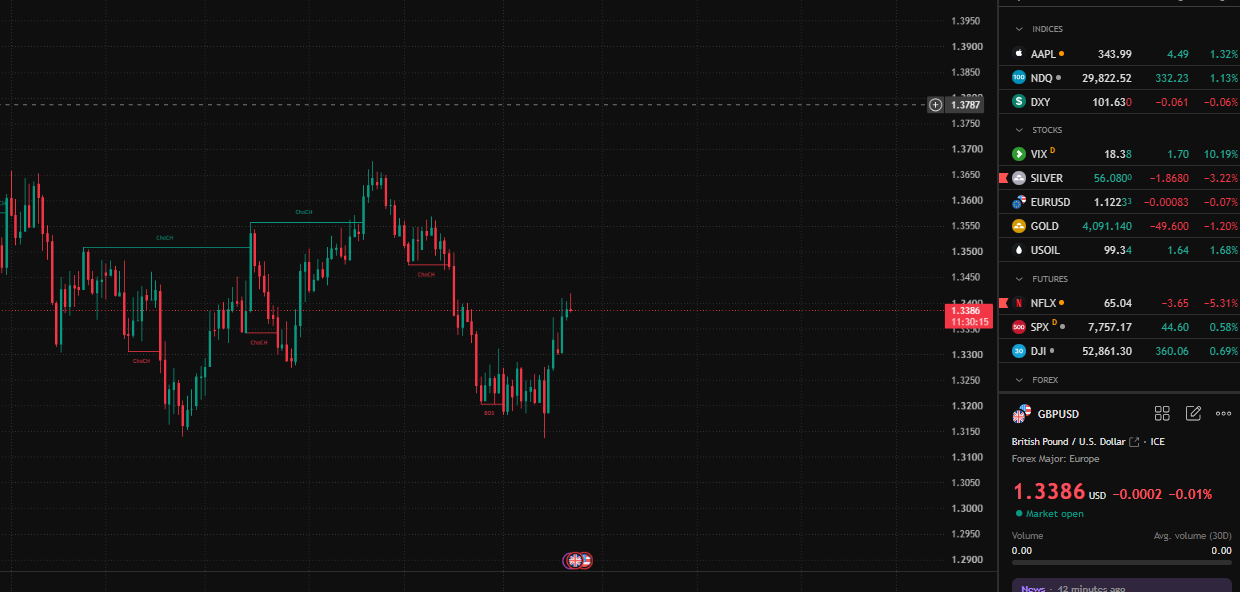
After — the reaction. A day or two on, once the first move has washed out, in the direction of this call and on a chart trigger. Flat before the Budget on 28 October.
Into 5 November — getting flat. If sterling runs up to an extreme ahead of the decision, longs will have profit to protect and a reason to bank it beforehand. That trade only exists if the chart is stretched.
What comes next
28 October — the Budget.
5 November — Bank of England decision.
What would prove this wrong
A Budget heavy on household tax rises, giving the Bank a reason to stop at one rise or delay it. Or the Bank signalling on 5 November that a rise is a one-off rather than the start of more.